Module
Transaction processing — The RTA feed lands and the book updates itself.
Without it
What this costs you today.
Without it, someone opens the RTA file, reads it, and types what it says into something else. That person is expensive, the work is joyless, and the error rate is exactly what you would expect at eleven at night on the last day of the month.
What it does
Business rules, not adjectives.
Folio master and transaction files are processed as they arrive, not on a nightly batch you wait for.
Units, cost basis and consolidated positions restate from the processed file.
Non-standard file formats are mapped during setup rather than rejected.
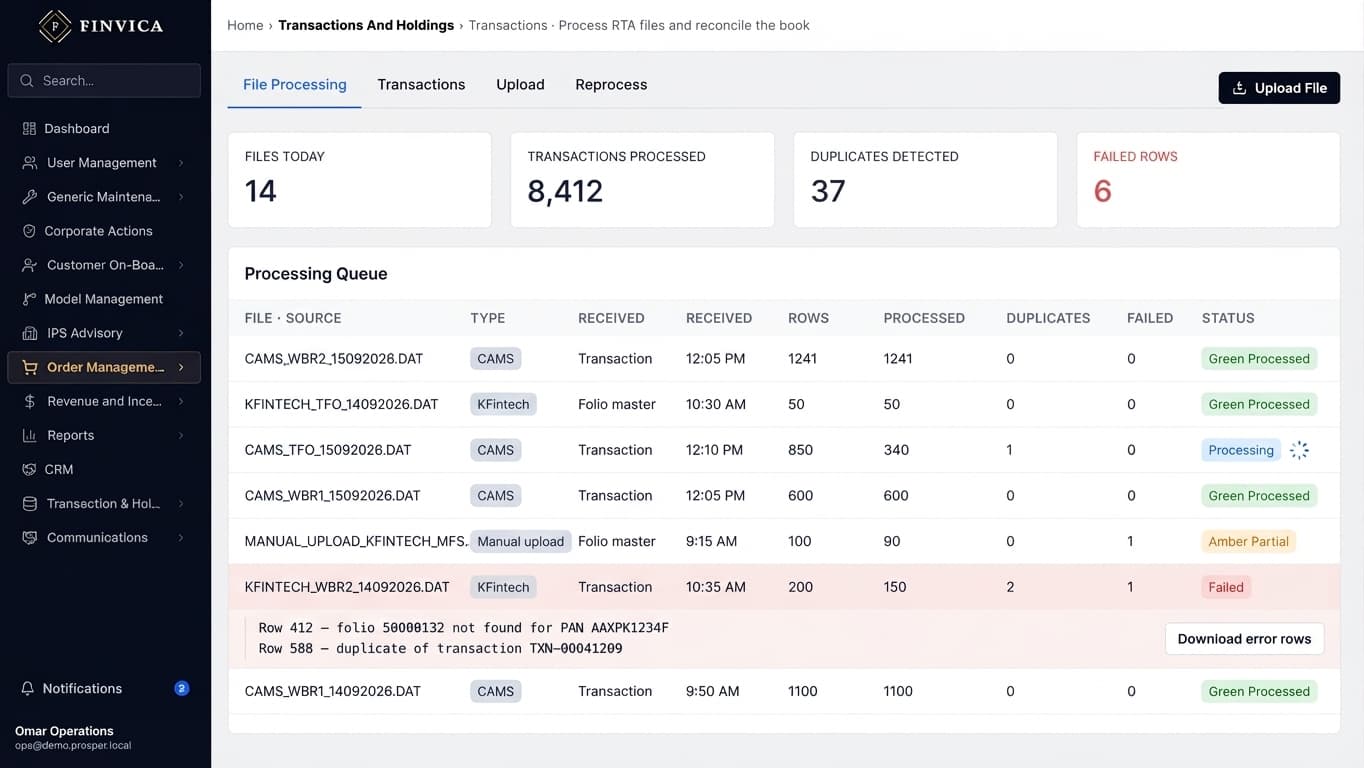
Duplicate transactions are detected instead of being loaded twice.
A file that fails says which row failed and why.
Historical files can be reprocessed without corrupting current positions.
On screen
Transaction processing, as it ships.
Coverage
Which product classes this covers.
RTA feeds cover mutual funds. Other classes update from provider or issuer statements, captured rather than fed.
How it works
Three or four steps, in order.
The file arrives
From CAMS, KFintech or your own upload.
It is validated
Structure, duplicates and unmatched folios flagged before anything is written.
Positions restate
Units and cost basis update across every affected client.
Exceptions surface
What did not match is listed rather than silently dropped.
- CAMS
- KFintech
What transaction processing connects to
Questions about transaction processing.
How often do feeds run?
Files are processed as they arrive. A file that lands mid-morning is reflected in the book that morning rather than overnight.
What if my RTA file format is non-standard?
Formats vary more in practice than the specifications suggest. Mapping a variant is routine setup work — send a sample and we will run it.